
You've got your heart set on Nashville, but the numbers just aren't adding up.
Does $500,000 for a starter home feel impossible? Are you wondering if moving 30-40 minutes out means giving up everything you wanted? Worried you'll hate the commute but love the extra square footage?
You're not alone. Every week, I talk to buyers facing this exact decision.
The good news? You've got solid options outside Nashville that won't destroy your budget or your sanity.
The Nashville Pricing Reality Check
Let's start with where we are right now.
Nashville's median home price sits around $480,000-$525,000 as of early 2026. That's for your typical entry-level home: nothing fancy, probably needs some work, and you'll spend about 56 days competing with other buyers.
The market has cooled from the wild seller's frenzy of years past. With over 11,000 active listings, you've got more choices than you did a year ago.
But here's the thing: more choices in Nashville still means paying Nashville prices.

If you're getting priced out, it's not because you can't afford a home. It's because Nashville's center commands a premium that might not make sense for your situation.
Gallatin: The Close-In Value Play
Drive 30 minutes northeast, and suddenly your buying power increases.
Gallatin's average home value hovers around $426,000: that's $50,000 to $75,000 less than comparable Nashville properties. For most buyers, that difference represents a bigger yard, an extra bedroom, or simply a lower monthly payment.
Homes move slightly slower here (about 65 days on market versus Nashville's 56). That's actually a good thing for you as a buyer. Less competition means more negotiating power.
What You're Really Getting in Gallatin
Sumner County has become a hotspot for new construction. Builders know what they're doing here: they're chasing the same growth patterns that made Franklin and Brentwood expensive decades ago.
You'll find newer homes with modern layouts. The school systems are solid. And you're still close enough to Nashville that your commute won't wreck your quality of life.
The infrastructure is growing too. Gallatin isn't some sleepy outpost anymore: it's becoming a legitimate suburb with its own amenities, restaurants, and community vibe.
The Gallatin Commute
Here's what matters: your morning drive to downtown Nashville typically runs 30-40 minutes in normal traffic. During rush hour, budget 45-55 minutes.
Vietnam Veterans Boulevard (Highway 386) is your main route. It's not a terrible commute, but it's not five minutes either.
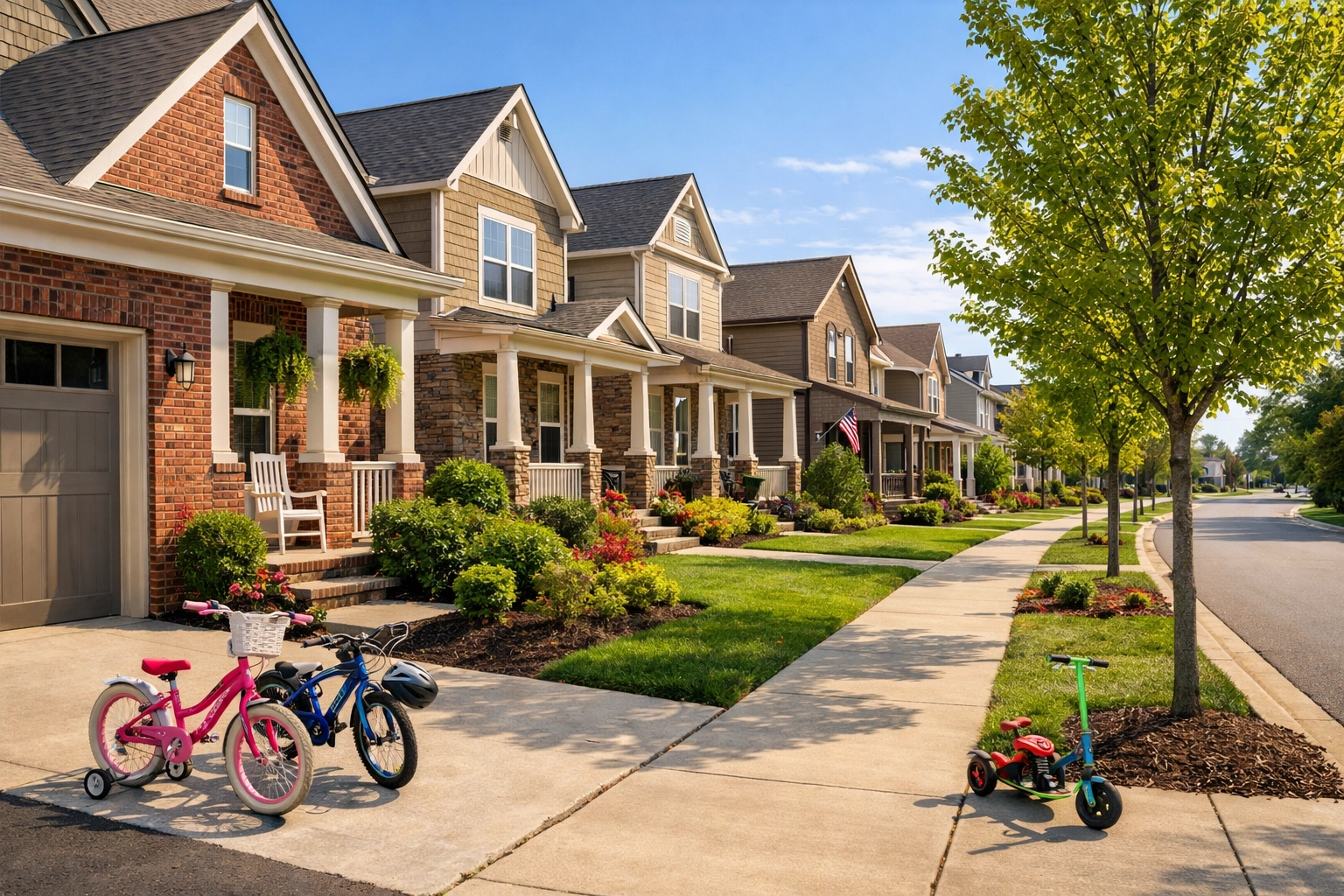
Ask yourself: would you rather spend an extra 30 minutes in the car each way, or an extra $400 a month on your mortgage for the same square footage in Nashville?
For many buyers, that math works out in Gallatin's favor.
Columbia: The Southern Alternative
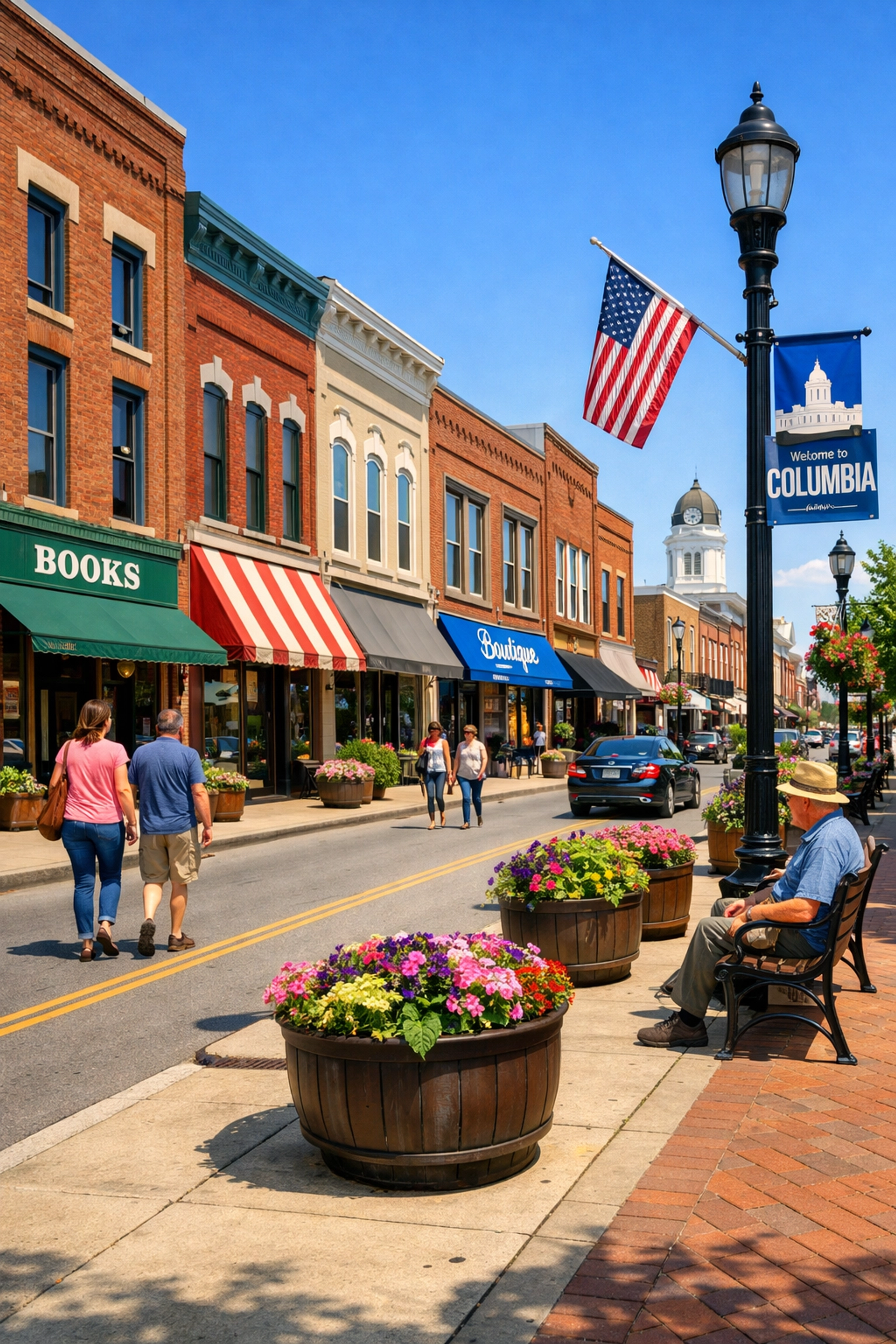
Head south on I-65 for 45 minutes, and you'll hit Columbia in Maury County.
This is what I call the "value play" for buyers who want newer construction and modern amenities without the price tag. The market here is growing steadily, and you're getting in before the area becomes the next hot spot.
Columbia doesn't have the same name recognition as Gallatin yet. That's your advantage.
What Makes Columbia Different
You're farther out than Gallatin, no question about it. But distance brings advantages beyond just price.
The cost of ownership in Columbia is increasingly comparable to what you'd pay in high-end Nashville rentals. Think about that: you could be building equity instead of handing $2,300-$2,500 to a landlord every month.
Columbia offers a small-town feel that some buyers actually prefer. If you've got kids, you're looking at less crowded schools and more space. If you work remotely most days, the distance matters even less.
The Columbia Commute
Be realistic: you're looking at 45-55 minutes to downtown Nashville on a good day. Rush hour can push that to 75 minutes.
This isn't a casual commute. This is "I need to really want to work in Nashville" territory.
But if you're hybrid or remote even a few days a week? Columbia suddenly becomes much more attractive. And if your job is in Cool Springs or Franklin, your commute actually gets easier.

Nashville: When the Premium Makes Sense
Let me be clear about something: staying in Nashville proper isn't always wrong.
If you're working downtown five days a week, the commute savings alone might justify the higher price. Calculate the value of your time: 20 hours of commuting per month adds up fast.
Nashville's urban core offers walkability, immediate access to entertainment, and that "city life" energy some people crave. You can't put a price on lifestyle fit.
The question is whether you can make the numbers work without stretching so thin that you're house-poor.
The Hidden Costs of Staying Central
That $525,000 Nashville house comes with urban property taxes and higher insurance. Your HOA might run $200-300 monthly. Parking could cost extra.
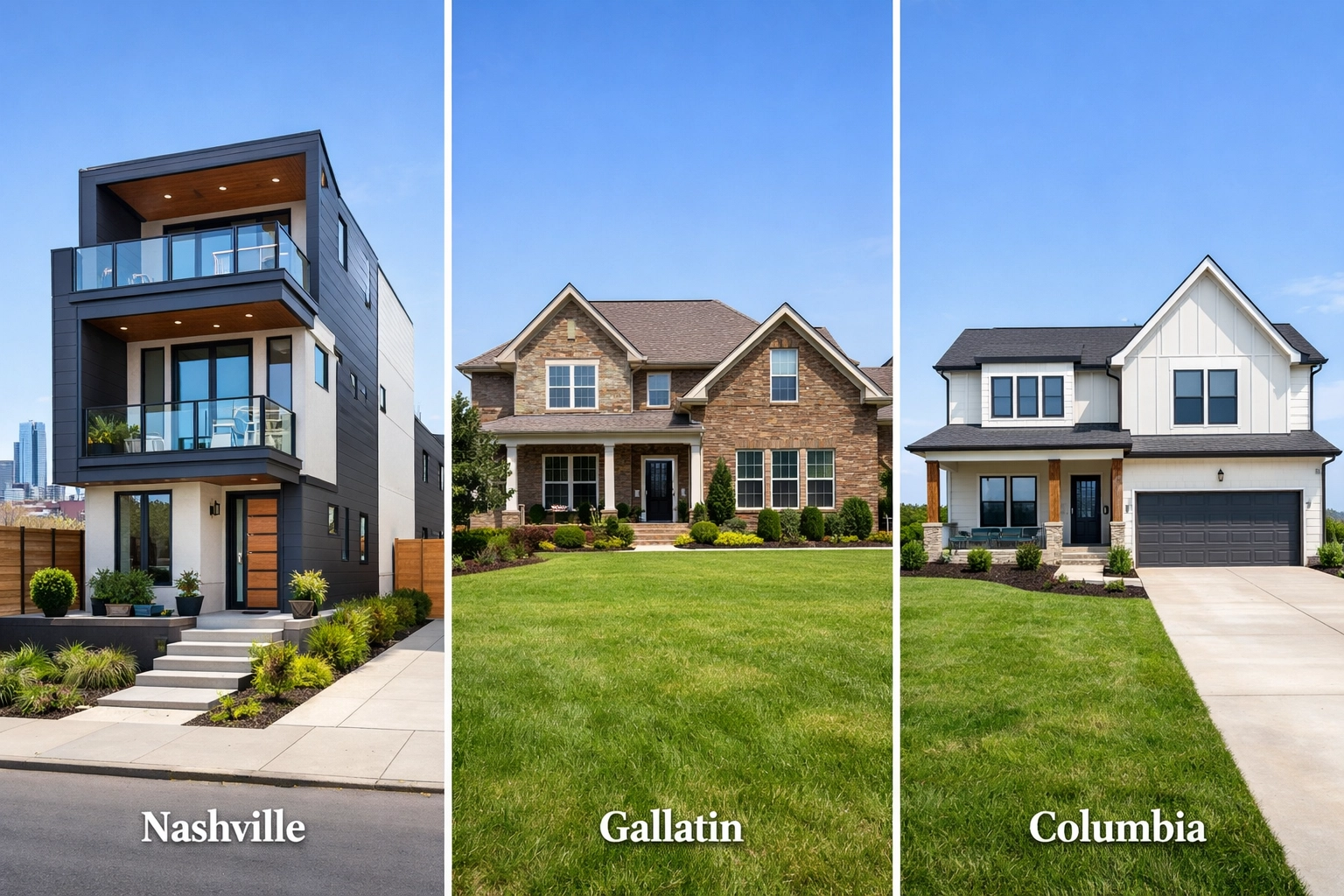
Meanwhile, the same monthly payment in Gallatin or Columbia might get you 300 more square feet, a real backyard, and a two-car garage.
What Smart Buyers Are Doing Right Now
The buyers I'm working with are getting creative.
Many are targeting Gallatin or Columbia for their primary residence while keeping Nashville on their radar for investment properties down the line. Build equity in the 'burbs, then upgrade or invest when your income grows.
Others are negotiating hard for seller concessions. In today's market, closing cost assistance and rate buydowns are increasingly common: even in surrounding areas like Gallatin and Columbia.
Some buyers are going straight to new construction in these outer markets. Builders are offering incentives you won't find on resale homes, and you get modern efficiency standards that lower your monthly utility costs.
Making Your Decision: The Questions That Matter
Stop thinking about "which area is best" and start thinking about which area is best for you.
Ask yourself these questions:
Do you need to be in the office daily, or are you hybrid/remote? Your commute tolerance changes everything.
Would you rather have a smaller, newer Nashville home or a larger, newer home 40 minutes out? There's no wrong answer here.
Are you planning to stay long-term, or is this a 3-5 year stepping stone? Investment timelines matter.
Do you value city amenities enough to pay the Nashville premium? Some people absolutely do: and that's fine.
What does your monthly budget actually support comfortably? Don't stretch so far that one unexpected expense breaks you.
The Growth Patterns Tell a Story
Here's something to consider: Oracle's planning to bring 8,500 jobs to the region. Amazon, healthcare systems, and other major employers keep expanding here.
That growth spreads outward. Nashville's core is already expensive, so new residents and businesses naturally push into surrounding areas.
Gallatin and Columbia are positioned to benefit from this expansion without forcing you to pay today's premium prices for tomorrow's growth.
The infrastructure investments: roads, schools, retail: follow the population. These areas are getting better, not worse.
What Happens Next?
You've got to see these areas for yourself.
Drive the commute during rush hour on a Tuesday morning. See how it actually feels, not how it sounds on paper.
Walk the neighborhoods in Gallatin and Columbia. Check out the local grocery stores, schools, and restaurants. Does it feel like somewhere you'd actually want to live?
Run the numbers honestly. Calculate your monthly payment at different price points and see what your lifestyle looks like at each level.
Then reach out to someone who knows these markets inside and out. Moving to Nashville: or just outside it: works best when you've got local expertise guiding you through what's actually available.
The right home in the right area is out there. Sometimes it's just not where you originally thought it would be.
And honestly? That's usually when buyers end up happiest with their decision.
Ready to explore your options? Let's talk about what makes sense for your specific situation. The coffee's on me.